I Moved Every Subscription to One Prepaid Card — and Watched Three of Them Die
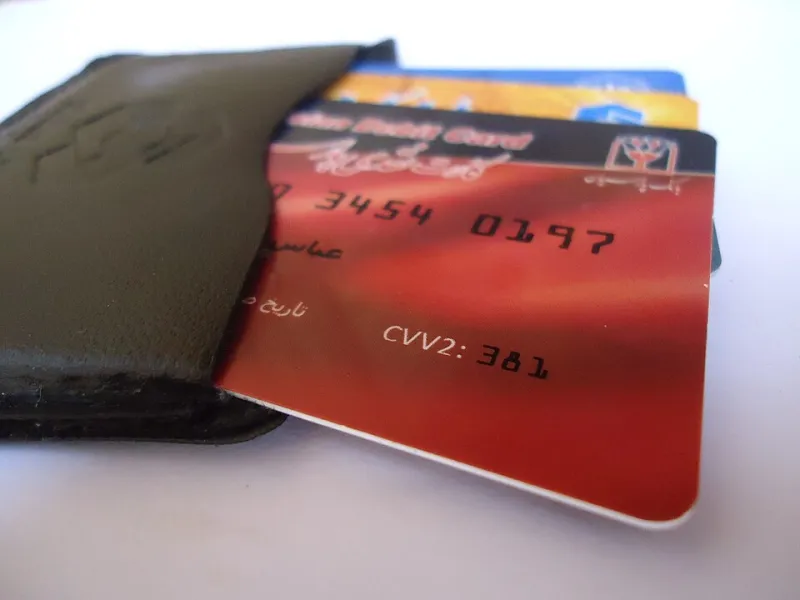
Photo: Elph, CC BY-SA 3.0, via Wikimedia Commons
For years, my subscriptions lived on my credit card, comfortably invisible. Netflix, Spotify, two cloud storage services, a meal kit I kept meaning to cancel, a fitness app I opened twice, a meditation app I'd forgotten existed. Autopay meant nothing ever got declined, which meant nothing ever got questioned — least of all by me.
So I ran an experiment. I bought a prepaid debit card, loaded it with exactly $85 — what I estimated my "fair" subscription spend should be — and updated every recurring charge to draw from it. The rule was simple: when the card runs dry, something gets cut. No transfers, no top-ups mid-month.
What happened over the next ninety days changed how I think about every recurring charge I own.
Week One: The Comfortable Illusion Shatters
The first month, everything went through. My $85 estimate had been roughly right. But here's what surprised me: seeing the balance tick down after each charge hit differently than seeing a line item on a credit card statement. A credit card balance is abstract. A prepaid card showing $61.50 remaining after the streaming services processed is concrete. It's a number that only goes one direction.
I found myself opening my banking app more, not less — the opposite of what bill fatigue research would predict. It turns out the problem with autopay isn't that you see your bills. It's that you see them in a context where they're indistinguishable from everything else.
Week Three: The First Casualty
The meal kit went first. It charged $52 — a promotional rate had expired, and I hadn't noticed. The card didn't have it. The charge declined. My phone buzzed with a polite email asking me to update my payment method.
Here's the thing: my old self would have updated the card in thirty seconds. Instead, I let it sit for a day. Then two. Then I realized I hadn't cooked from it in six weeks and the two boxes in my fridge had mostly gone to waste. I didn't cancel it out of discipline. I cancelled it out of friction — the tiny pause where a declined charge forces you to make an active choice instead of a passive one.
That's the whole trick, really. Prepaid cards don't save you money through magic. They save you money by inserting a decision point where autopay had installed a bypass.
What I Didn't Miss
By the end of month two, three subscriptions had been declined and only one was worth re-adding. The casualties:
- The meal kit — gone, as established.
- The second cloud storage service — I had two. Two! I'd been paying for redundancy like a paranoid squirrel. The declined charge made me actually check what was stored where, and 90 minutes of cleanup saved me $9.99 a month.
- A fitness app I'd been "meaning to get back into" since 2022. The meaning-to had become part of my identity. The decline made me confront that I wasn't getting back into anything.
What stayed: Spotify, my primary cloud storage, and Netflix. All three earn their keep monthly. That's the other lesson — the point of the experiment wasn't to nuke my subscriptions. It was to find out which ones were actually load-bearing.
The Scarcity Effect, Explained
Behavioral economists call this "payment transparency" — the idea that the pain of paying is real and varies by method. Cash hurts most. Credit cards numb it. Prepaid cards sit in an interesting middle zone: it's not your whole bank account at stake, but it's a finite pool that visibly shrinks with every recurring charge.
The effect compounded in unexpected ways. When a friend suggested a new streaming service in month three, my first thought wasn't "ooh, free trial." It was "what gets cut to make room?" That's a fundamentally different relationship with a $15-a-month decision than the one autopay had trained me into.
How to Run Your Own Version
If you want to try this, the setup takes an afternoon:
- Tally your subscriptions. Bank and card statements, app store subscriptions, PayPal recurring payments. Most people underestimate by 30-40%.
- Pick a number. Whatever you want to spend, not what you currently spend. The gap is the point.
- Load a prepaid card (many grocery stores and pharmacies sell them; several fintech apps offer virtual versions) and update payment methods on every subscription.
- Set a calendar reminder for when the card will run dry based on your number.
- Don't top up. That's the entire experiment. A declined charge is data, not a problem.
One caveat: keep anything with real consequences — insurance, phone, utilities — on a reliable payment method. This is a tool for the discretionary pile, not the bills that keep the lights on.
Three months in, I spend about $54 a month on subscriptions, down from $138. I didn't feel deprived once. I just felt, for the first time in years, like I was the one deciding.