Before the Water Heater Gives Out: The Break-Even Math on a Home Warranty
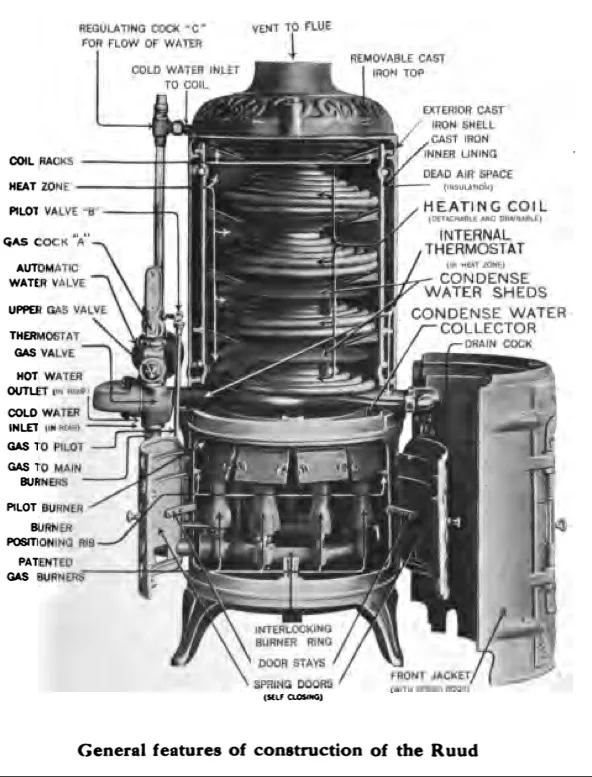
Photo: Edwin Ruud, US Patent Office, Public domain, via Wikimedia Commons
Home warranties sell a feeling, and the feeling is: someone else handles this. The contract you get is narrower than the feeling. It's a service plan with a premium, a per-visit deductible, item-specific coverage caps, and a list of exclusions long enough to matter more than the headline.
None of that makes a warranty a bad deal. It makes it a math problem — one you can solve in about twenty minutes with a calculator and a rough sense of what things cost to fix.
What the plan pays, and what it doesn't
A typical plan runs $500 to $850 a year depending on coverage tier. When something breaks, you file a claim, pay a trade service fee of roughly $75 to $125, and a contractor the company assigns comes out.
The critical detail: many plans cap payouts per item, commonly somewhere between $1,500 and $3,000, and some cap the total for the year. They also pay per the company's judgment of what's covered, using contractors in their network, replacing with equipment they choose. You don't get to pick the brand, the installer, or often the upgrade.
Then there's the exclusion list. Pre-existing conditions are the big one. A warranty is not insurance against problems you already have — it's coverage for failures that happen after the coverage period starts, and companies can and do deny claims when they conclude the failure was already developing. A 14-year-old water heater that dies in month four of your policy is exactly the kind of claim that gets contested. So is anything without documented maintenance.
Also usually outside the plan: code upgrades, permits, hauling away the old unit, and anything the contractor finds once they're inside the wall. Those come out of your pocket on top of the service fee.
The service fee is the real price of a claim
Here's where people underestimate the cost. The premium is the subscription. The service fee is the deductible, and it applies per visit, not per year.
Two claims in a year means two service fees. Three means three. Suddenly an $700 premium isn't $700 — it's $700 plus $250 in fees plus whatever the exclusions didn't cover, which on a well-aged HVAC system can be $600 before you've fixed anything.
The self-insure comparison
This is the framework that settles the question. List the systems and appliances the plan covers, then estimate the realistic cost of the most common failure for each in your market. Rough 2026 US ballparks, and yours will vary by region:
| Item | Typical replacement cost | Expected failures over 10 years |
|---|---|---|
| Water heater | $1,200–$2,500 | 1 |
| Dishwasher | $700–$1,400 | 1–2 |
| Central AC (whole system) | $6,000–$12,000 | 1 |
| Furnace | $4,000–$8,000 | 1 |
| Refrigerator (covered items only) | $900–$2,200 | 1 |
Now do the other side. Take your premium, add your expected service fees based on realistic claim frequency, and multiply by the number of years you're comparing. Ten years at $700 is $7,000 — before fees, before exclusions, before a single denied claim.
Then ask the honest question: over that same ten years, is it likely you'll have more than $7,000 of covered failures? For a house with a brand-new HVAC system and appliances under ten years old, almost certainly not. For a 1990s house with a 20-year-old furnace and a water heater of unknown age, the answer can flip.
Where the warranty genuinely wins
Three situations where the math actually favors the plan:
Age and uncertainty stack up. Old systems you can't inspect, in a house you just bought, with no service records. The warranty is buying you information as much as repairs.
You'd struggle with a five-figure hit. A warranty converts a $9,000 HVAC replacement into a premium plus a service fee — if the claim is approved. That's a cash-flow function more than an expected-value one, and it's legitimate. Just don't confuse the two.
The seller paid for it. A one-year plan included in a home purchase is nearly free information. Use it, test it, and see how the company handles a claim before you renew. Renewal is where the real decision lives.
Read three things before you sign or renew
The exclusions section, the per-item coverage cap, and the maintenance requirement. If the contract requires documented annual service on the covered equipment and you don't have records, you've purchased something you may not be able to use.
And when the renewal notice comes, don't auto-pay it out of habit. Ask what changed in the coverage and what the new caps are. A warranty that quietly narrowed while the premium rose is a subscription that stopped earning its keep — and unlike a streaming service, you won't notice it's gone until the water heater tells you.